


What Is 925 Silver, 18K Gold, Gold Vermeil, Platinum & Moissanite? Complete Jewellery Guide
When buying jewellery, the design may be the first thing you notice, but the material determines many important characteristics, including appearance, durability, care, and price. Terms such as 925 silver, 18k gold, Gold Vermeil, platinum, and Moissanite Diamond are commonly seen when shopping for jewellery, but they describe very different materials.
Understanding these terms can help you choose the right piece for everyday wear, special occasions, or Gifts for Her. In this complete guide, we explain the 925 silver meaning, What Is Gold Vermeil, the gold vermeil meaning, what is vermeil, how 18k gold differs from Gold Vermeil, what makes platinum suitable for jewellery, and what Moissanite actually is.
What Is 925 Silver? Understanding the 925 Silver Meaning
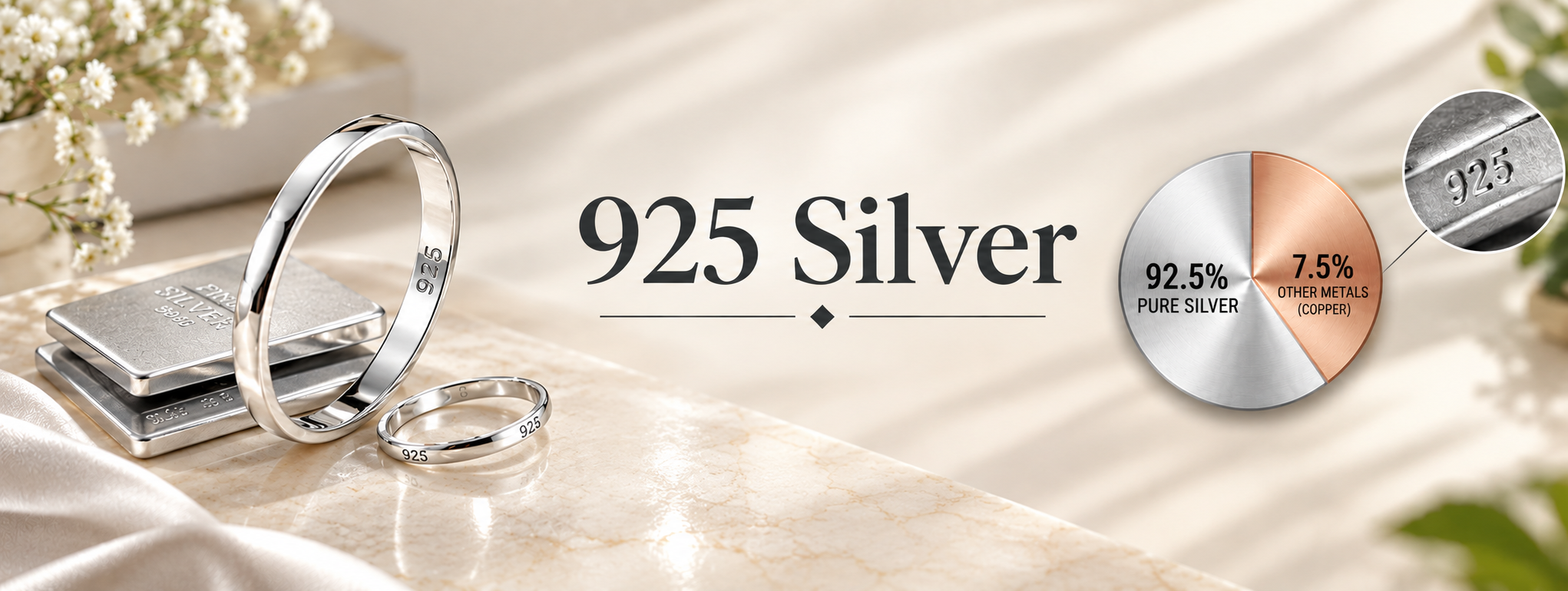
The 925 silver meaning refers to sterling silver containing 92.5% pure silver. The remaining 7.5% is generally made from other metals, often copper, to improve the strength and workability of the material.
Pure silver is relatively soft, so adding other metals makes sterling silver more practical for jewellery making.
Is 925 Sterling Silver Good?
If you are wondering is 925 sterling silver good, it is one of the most widely used silver materials for jewellery. It offers:
-
92.5% silver content
-
A bright and classic silver appearance
-
Good workability for detailed jewellery
-
Suitable durability for many everyday designs
-
A more accessible price than many solid precious-metal options
However, 925 silver can tarnish over time. Air, moisture, perfumes, cosmetics, and certain chemicals can contribute to tarnishing. Proper storage and regular cleaning can help maintain its appearance.
What Is 18K Gold?
18k gold contains 75% pure gold, while the remaining 25% consists of other metals. These additional metals help improve strength and can influence the final colour of the gold.
18k gold is commonly used for:
-
Rings
-
Necklaces
-
Earrings
-
Bracelets
-
Fine jewellery
Its high gold content gives it a rich appearance while allowing it to be shaped into detailed jewellery designs.
It is important to understand that 18k gold and 18k Gold Vermeil are not the same.
Solid 18k gold jewellery is made from an 18k gold alloy throughout. In contrast, 18k Gold Vermeil has a sterling silver base with an 18k gold layer on its surface.
What Is Gold Vermeil?
What Is Gold Vermeil? Gold Vermeil is jewellery made with a sterling silver base and a layer of genuine gold. The required gold purity and layer thickness can vary according to the applicable standard or market.
The gold vermeil meaning therefore describes a specific jewellery construction rather than simply describing jewellery that looks gold.
Gold Vermeil is not solid gold. Because the gold is applied as a surface layer, friction, chemicals, moisture, and frequent wear can affect the finish over time.
What Is Vermeil?
When people search for what is vermeil, they are often comparing it with ordinary gold-plated jewellery.
The main difference is the base material:
|
Jewellery Type |
Base Material |
Surface |
|
Gold Vermeil |
Sterling silver |
Genuine gold layer |
|
Gold Plated |
Various base metals |
Gold layer |
|
Solid Gold |
Gold alloy throughout |
No separate plating layer |
Therefore, vermeil is more specific than simply saying that a jewellery piece is gold plated.
When shopping for gold vermeil jewelry, check the base metal, gold purity, gold-layer thickness, product specifications, and care instructions.
Gold Vermeil Jewellery for Everyday Style
Gold Vermeil Jewellery is popular in contemporary jewellery because it combines the appearance of gold with a sterling silver foundation.
Gold Vermeil can be used for:
-
Minimal necklaces
-
Pendant necklaces
-
Delicate rings
-
Hoop and drop earrings
-
Stackable bracelets
-
Personalised jewellery
The gold layer can wear over time, particularly with frequent friction or exposure to chemicals. Following the brand's care instructions can help preserve the finish.
What Is Platinum?
Platinum is a naturally white precious metal known for its density, durability, and resistance to corrosion.
It is commonly used for fine jewellery such as:
-
Engagement rings
-
Wedding bands
-
Gemstone rings
-
Fine necklaces
-
High-value jewellery settings
Platinum has a naturally white appearance and does not need to be yellow in colour. Its density also gives platinum jewellery a distinctive substantial feel.
Although platinum is durable, it can still develop surface marks through regular wear.
Why Are Gold and Platinum Suitable for Making Jewellery?
A frequently searched jewellery question is why are gold and platinum suitable for making jewellery?
Gold is naturally attractive, malleable, and resistant to corrosion. Its malleability allows jewellers to shape it into intricate designs and detailed settings.
Platinum is naturally white, dense, durable, and corrosion-resistant. These properties make it particularly useful for jewellery where a strong metal setting is required.
Both metals have properties that support jewellery manufacturing, but the choice between them depends on factors such as design, budget, appearance, durability requirements, and personal preference.
What Is a Moissanite Diamond?
The term Moissanite Diamond is frequently used in jewellery searches, but moissanite and diamond are different gemstones.
Moissanite is made from silicon carbide. Modern jewellery commonly uses laboratory-created moissanite because naturally occurring moissanite is extremely rare.
Moissanite is known for:
-
High brilliance
-
Strong light dispersion
-
Colourful flashes of light
-
Approximately 9.25 hardness on the Mohs scale
-
Availability in different cuts and shapes
Diamond has a Mohs hardness of 10, while moissanite is approximately 9.25. They also have different chemical compositions and optical characteristics.
925 Silver vs 18K Gold vs Gold Vermeil vs Platinum vs Moissanite
|
Material |
What It Is |
Main Characteristic |
Common Uses |
|
925 Silver |
92.5% silver + other metals |
Bright silver appearance |
Rings, earrings, bracelets |
|
18K Gold |
75% gold + other metals |
Rich gold appearance |
Fine jewellery |
|
Gold Vermeil |
Sterling silver + genuine gold layer |
Gold finish over silver |
Everyday jewellery |
|
Platinum |
Precious platinum metal |
Naturally white and dense |
Fine jewellery |
|
Moissanite |
Silicon carbide gemstone |
Strong brilliance and fire |
Rings, earrings, necklaces |
These materials should not be treated as interchangeable. Your choice should depend on your budget, style, intended use, maintenance preferences, and desired appearance.
Popular Jewellery Choices for Women
Material is important, but jewellery design also determines how a piece fits into your wardrobe.
Rings for Girls
Rings for girls can include simple bands, gemstone designs, personalised rings, and statement styles. 925 silver and Gold Vermeil are popular options for contemporary ring designs.
When buying a ring online, getting the correct size is particularly important.
Necklace for Women
A necklace for women can be selected according to neckline, chain length, pendant size, and personal style.
Shorter necklaces can work well with open necklines, while longer designs can complement layered outfits.
Earrings for Women
Earrings for women range from small studs and hoops to drops and statement earrings.
Lightweight earrings can be convenient for everyday wear, while gemstone or detailed styles can add more visual interest to festive outfits.
Bracelets for Women
Bracelets for women can be worn individually or layered with other pieces. Delicate 925 silver and Gold Vermeil bracelets can work well with both casual and dressier looks.
Together, these categories make up versatile women's jewelry for everyday styling, celebrations, and gifting.
Necklace Length Chart
Choosing the right necklace length can affect how a pendant sits and how it works with different necklines.
|
Necklace Length |
Approximate Placement |
Common Styling |
|
14 inches |
Close to the neck |
Choker-style looks |
|
16 inches |
Base of the neck |
Everyday wear |
|
18 inches |
Near the collarbone |
Versatile styling |
|
20 inches |
Below the collarbone |
Casual and layered looks |
|
22 inches |
Upper chest |
Longer pendants |
|
24 inches |
Mid-chest |
Statement or layered looks |
This necklace length chart is a general guide. Actual placement can vary based on neck size, chain design, pendant size, and clothing.
How to Measure Ring Size at Home
If you are buying rings online, knowing how to measure ring size can help you select an appropriate fit.
Try this simple method:
-
Take a narrow strip of paper or non-stretch string.
-
Wrap it comfortably around the base of your finger.
-
Mark where the ends meet.
-
Measure the marked length in millimetres.
-
Compare the measurement with a reliable ring-size chart.
Home measurements can be approximate. For valuable jewellery or a precise fit, professional ring sizing is recommended.
Choosing Jewellery as Gifts for Her
Jewellery is a popular choice for Gifts for Her because different pieces can suit different personalities and occasions.
You can consider:
-
Rings for someone who enjoys personal or symbolic jewellery
-
Necklaces for versatile everyday styling
-
Earrings when you want to avoid ring-size concerns
-
Bracelets for delicate and layered looks
-
Gold Vermeil Jewellery for a gold finish over a sterling silver base
-
Moissanite jewellery for someone who enjoys noticeable gemstone brilliance
Before choosing a gift, consider the recipient's preferred metal colour, existing jewellery collection, lifestyle, and personal style.
Infinity Symbol Meaning in Jewellery
The Infinity Symbol Meaning is commonly associated with eternity, endless connection, lasting love, friendship, continuity, and commitment.
The ∞ shape has no obvious beginning or end, which is why it has become a popular jewellery motif.
An infinity necklace, ring, or bracelet can add symbolic meaning to a jewellery piece, making it suitable for personal wear or Gifts for Her.
How to Choose the Right Jewellery Material
Before buying jewellery, look beyond the colour and design. Check:
Base material: Is it 925 silver, solid gold, Gold Vermeil, platinum, or another metal?
Purity: Check the stated gold purity, such as 18k, when applicable.
Construction: Understand whether the piece is solid metal or has a surface gold layer.
Gemstone: Check whether the stone is diamond, moissanite, or another gemstone.
Size: Confirm ring measurements and necklace lengths before ordering.
Care: Follow the specific care instructions for the material and finish.
These details can help you understand exactly what you are purchasing.
Wingaura Jewels and Jewellery Materials
At Wingaura Jewels, understanding jewellery materials can help customers select pieces that suit their style and everyday needs. From 925 silver designs to Gold Vermeil Jewellery, different materials offer different appearances and characteristics.
Whether you are looking for a delicate necklace, everyday earrings, bracelets, rings, or meaningful Gifts for Her, understanding the material can help you make a more informed choice.
Conclusion
Understanding jewellery materials makes shopping easier and more transparent. 925 silver contains 92.5% silver, 18k gold contains 75% gold, Gold Vermeil uses sterling silver as its base with a genuine gold layer, and platinum is a naturally white precious metal known for its density and durability.
Moissanite is a different gemstone from diamond and is made from silicon carbide. It is known for its brilliance, durability, and colourful light dispersion.
Whether you are choosing rings for girls, a necklace for women, earrings for women, bracelets for women, or Gifts for Her, understanding the material, construction, sizing, and care requirements can help you select jewellery that fits your needs and personal style.
Frequently Asked Questions
1. What is the 925 silver meaning?
The 925 silver meaning is that the material contains 92.5% silver, with the remaining 7.5% generally consisting of other metals that improve strength and workability.
2. Is 925 sterling silver good for everyday jewellery?
Yes. 925 sterling silver is widely used for everyday jewellery because it is attractive, workable, and suitable for many designs. It can tarnish over time, so proper care is recommended.
3. What Is Gold Vermeil?
Gold Vermeil is jewellery made with a sterling silver base and a genuine gold layer that meets applicable requirements for vermeil.
4. What is vermeil and how is it different from gold plating?
Vermeil specifically uses sterling silver as its base metal. Generic gold-plated jewellery can use different base metals beneath the gold layer.
5. Is 18k gold the same as 18k Gold Vermeil?
No. 18k gold contains 75% gold throughout the alloy, while 18k Gold Vermeil has a sterling silver base with an 18k gold layer applied to the surface.
6. Is Moissanite Diamond the same as a diamond?
No. Moissanite and diamond are different gemstones. Moissanite is made from silicon carbide, while diamond is made from carbon. They have different compositions, optical properties, and hardness levels.
7. Why are gold and platinum suitable for making jewellery?
Gold is malleable, attractive, and resistant to corrosion, while platinum is naturally white, dense, durable, and corrosion-resistant. These properties make both suitable for creating jewellery and gemstone settings.
