
Skilled Janome Embroidery Specialists: From Artwork to Machine-Ready Designs
Introduction
You have a beautiful design in mind. Maybe it is a logo for your business, a custom patch for a jacket, or a heartfelt gift for someone special. You can see it clearly in your head. But getting that image from your computer screen onto fabric with your Janome machine is not as simple as hitting print. It requires a specialized translation process that turns pixels into precise stitch commands. That is exactly where Skilled Janome Embroidery Specialists come into the picture. These professionals bridge the gap between your creative vision and the finished product, ensuring every stitch lands exactly where it should.
The journey from artwork to a machine-ready design involves a process called digitizing. This means converting your image into a file your embroidery machine can read and stitch . It is not a simple conversion. It involves deciding which stitch types to use, setting the right density, choosing thread colors, and compensating for how fabric behaves under the needle. When you work with a specialist who understands Janome machines inside and out, you get designs that stitch out cleanly, efficiently, and beautifully.
Understanding the Janome File Format
If you own a Janome embroidery machine, you have probably heard of the JEF file format. This is the default stitch data format for all current Janome embroidery machines . It is the language your machine speaks. The JEF file contains machine-readable instructions for every single stitch in the design, plus coordinates that tell the hoop where to move .
There is also a newer format called JEF+. This is an editable stitch data file created in Janome software programs or directly on certain machines . The big difference is that JEF+ files allow you to move, rotate, or resize individual design elements even after you have combined them. Older machines grouped everything into a single JEF file that could not be edited separately . Some older Janome models can only read standard JEF files, so knowing which format your machine supports is essential .
What Digitizing Really Involves
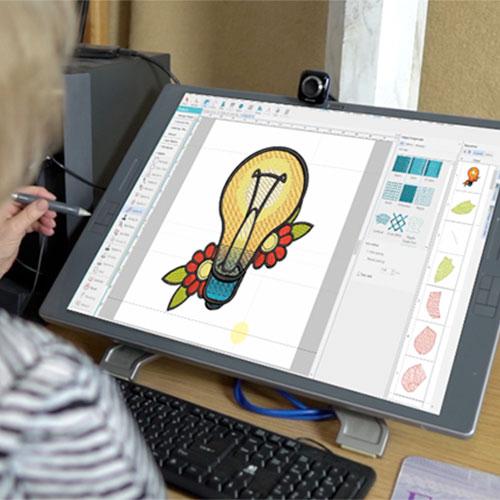
Digitizing is the process of converting artwork into embroidery stitches . The software determines the stitch type, direction, density, and color changes to make the image machine-readable . It is not an automatic process. A skilled digitizer makes deliberate decisions about every element of your design.
The Janome Digitizer software, developed in partnership with Wilcom, offers tools for both beginners and experienced users . It includes auto-digitizing for simple images, manual digitizing tools for precise control, lettering features, and real-time preview simulation . You can adjust stitch density, underlay, and pull compensation within the software to suit different fabric types . But even with these powerful tools, mastering the craft takes time and practice.
One important tip from the experts is to keep your images simple. Complex raster images with many tiny sections of color get broken into lots of segmented stitching sections. Each section requires a knot at both ends, and when too many tiny sections stack up close together, those knots can tangle on the back of the fabric. This can lead to fabric bunching, thread breaking, and even needle breaking . A specialist knows how to simplify artwork without losing its essential character.
Why Professional Expertise Makes a Difference
You might be tempted to digitize your own designs using software. And you absolutely can learn this skill. But there is a reason professional digitizers exist. The digitizing process is not always as easy as it seems . It involves understanding fabric behavior, thread tension, machine capabilities, and how to optimize designs for production.
When you hire a specialist, you get more than just a file. You get experience. They have likely digitized hundreds or thousands of designs. They know what works and what does not. They understand that a design digitized for a heavy denim jacket will fail on a lightweight polo shirt. They adjust stitch density, underlay, and stitch types based on your specific fabric and garment type.
They also test their work. A professional does not just send you a file and hope for the best. They stitch out the design on a sample piece of the same fabric you plan to use. This test run catches issues before you run a large production batch. It saves you from wasting materials and frustrating your customers.
Tips for Working with Your Specialist
To get the best results from your specialist, communicate clearly. Provide clean, high-resolution artwork. If you have vector files like AI, EPS, or SVG, send those. They give the digitizer the clearest starting point. Tell them about your fabric, garment type, and design placement. The more information you provide, the better the file will be.
Ask about their revision policy. A good specialist offers reasonable revisions if something needs adjustment after the test run. Check what file formats they provide. They should be able to deliver JEF for your Janome machine. If you have an older machine that only reads standard JEF, mention that upfront.
And remember, quality digitizing costs money. If a service offers incredibly low prices, they are likely using auto-digitizing software that produces messy files with unnecessary trims and overlapping micro-stitches. The money you save on digitizing will be eaten up by wasted thread, broken needles, and frustrated customers.
Conclusion
Bringing your embroidery ideas to life requires more than just a creative vision. It requires skilled translation of that vision into a language your Janome machine understands. Skilled specialists bring years of experience, technical knowledge, and attention to detail to every project they handle.
They understand the nuances of the JEF format. They know when to use satin stitches versus fill stitches. They compensate for fabric behavior and optimize designs for smooth production runs. They test their work to ensure flawless results before you ever load a file onto your machine.
Working with a professional digitizer is an investment in quality. Your designs will look clean and polished. They will stitch out efficiently without thread breaks or puckering. And they will represent your brand or your creativity in the best possible light. That is the difference that skilled specialists make.
