


Why the RF Test Equipment Market Is Critical for Next-Generation Connectivity
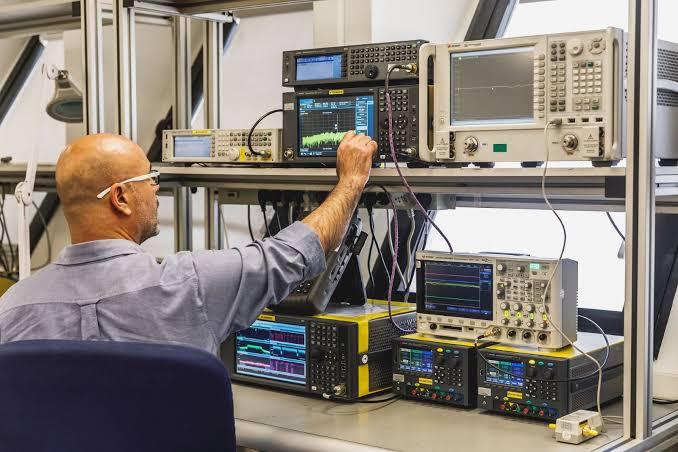
The rapid evolution of wireless communication ecosystems has placed radio frequency testing instruments at the center of modern network engineering and hardware deployment strategies across multiple global industries. As telecommunications providers transition from legacy networks toward advanced 5G Advanced and early 6G frameworks, the absolute necessity for precision measurement tools becomes paramount for maintaining signal integrity, mitigating interference, and verifying system compliance across complex frequency spectra. Engineers and infrastructure developers rely on sophisticated spectrum analyzers, vector network analyzers, and signal generators to validate component design before full-scale commercial manufacturing takes place. Furthermore, the exponential growth of connected Internet of Things devices and satellite constellations demands rigorous evaluation protocols to ensure seamless interoperability within increasingly congested electromagnetic environments. Analyzing these structural shifts reveals how critical the global RF Test Equipment Market analysis is becoming to major technology firms, semiconductor manufacturers, and network service operators worldwide. Without robust testing mechanisms, the performance guarantees promised by ultra-reliable low-latency communications and massive machine-type communications simply cannot be realized in real-world deployments. Consequently, business leaders must prioritize investment in adaptable test platforms capable of handling higher millimeter-wave frequency bands, wider modulation bandwidths, and complex multi-antenna configurations to remain competitive in today's digital landscape.
Beyond commercial telecommunications, the aerospace, defense, and automotive sectors are significantly influencing the broader requirements expected from modern radio frequency evaluation solutions. Modern automotive engineering relies heavily on radar systems, vehicle-to-everything communication protocols, and satellite navigation technologies, all of which require meticulous testing under challenging environmental conditions. In aerospace and defense applications, radio frequency measurement systems are essential for validating radar systems, electronic warfare countermeasures, and secure tactical communications where signal failure is not an option. Testing equipment manufacturers are responding by developing modular, software-defined testing hardware that allows field engineers to upgrade system capabilities through software patches rather than replacing physical chassis. This shift toward modular architecture drastically reduces long-term operational expenditures while accelerating time-to-market for innovative wireless products. Additionally, the integration of artificial intelligence and machine learning algorithms within automated testing software enables predictive diagnostics and rapid anomaly detection, greatly streamlining production-line testing. As regulatory bodies enforce stricter electromagnetic compatibility standards across international borders, the deployment of reliable testing equipment remains a core pillar of risk management and quality assurance for enterprise technology developers global infrastructure projects.
FAQ 1: Why is RF test equipment essential for 5G and future 6G network rollouts?
RF test equipment is critical because higher frequency bands, such as millimeter-wave, suffer from higher signal attenuation and environmental interference, requiring precise measurement tools to optimize coverage, beamforming performance, and network reliability.
FAQ 2: How do software-defined modular test systems benefit technology manufacturers?
Modular software-defined systems enable hardware to adapt to evolving communication protocols via software updates, significantly lowering total cost of ownership and reducing time-to-market for new wireless hardware products.
➤➤➤Explore MRFR’s Related Ongoing Coverage In Semiconductor Industry:
Optical Emission Spectroscopy Market
Infrastructure Monitoring Market
