


Safety Light Curtains Market Size and Growth Analysis Driven by Industrial Safety Regulations
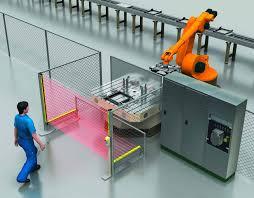
Group discussions centered on industrial automation frequently revisit the critical balance between operational efficiency and worker safety. In high-speed manufacturing environments, traditional physical barriers like metal fences and mechanical interlocks often slow down throughput and limit real-time access to automated machinery. Safety light curtains have emerged as an indispensable optoelectronic solution, establishing invisible photoelectric barriers that instantaneously detect human intrusion and trigger emergency stops. As smart factories scale up, the transition toward integrated, compact, and high-resolution light curtains is altering how plant managers evaluate risk mitigation. Incorporating these optical sensing solutions minimizes workspace footprints while maintaining strict compliance with evolving international safety directives. Furthermore, advanced diagnostic capabilities embedded within modern optical units allow maintenance teams to predict potential alignment errors or optical degradation before catastrophic downtime occurs. Understanding these operational benefits is key to assessing how automated safety devices enhance productivity without compromising worker health.
A detailed Safety Light Curtains Market analysis demonstrates how the accelerated deployment of robotics, computer vision, and industrial Internet of Things (IoT) technology is reshaping industrial safety protocols. Modern light curtains are no longer standalone safety devices; they are connected nodes capable of transmitting real-time operational telematics directly to central programmable logic controllers (PLCs) and cloud analytics platforms. This connectivity facilitates automated muting and blanking features, allowing specific materials to pass through the sensing field without interrupting machine operations while still protecting human operators. However, key discussion points in executive forums often focus on the capital expenditure required for complete retrofit programs, alongside the technical expertise needed to configure complex safety networks. As regulatory bodies enforce stricter machine guarding standards across automotive, semiconductor, and packaging industries, evaluating total cost of ownership against potential liability reduction remains a vital exercise for industrial leadership teams.
Frequently Asked Questions
How do safety light curtains differ from standard photoelectric sensors? Safety light curtains utilize redundant self-checking circuitry and fail-safe architecture to ensure continuous detection capability, whereas standard photoelectric sensors lack safety certifications and redundancy mechanisms required for human protection.
What is the function of muting and blanking in modern light curtains? Muting temporarily suspends safety functions automatically during non-hazardous phases of a machine cycle to permit material passage, while blanking disables specific beams within the curtain to accommodate permanent or moving machinery structures without triggering an emergency shutoff.
➤➤➤Explore MRFR’s Related Ongoing Coverage In Semiconductor Industry:
Endpoint Detection And Response Market
Property Casualty Insurance Market
